Here’s the keynote video from the second annual No kill Conference in Washington, DC. More to come once I get unpacked!
Author Archives: jennariedi
I’m Back!
First, I want to apologize for disappearing these past two months. Many things have happened, and while it’s no excuse to abandon my site I hope you will understand! Since my last post I have interviewed and accepted a position with Austin Pets Alive! (www.austinpetsalive.org) So the past two months involved two trips to Austin (one for the second round interview and the other for apartment hunting), packing up my place, finishing up my jobs in Wisconsin, packing up the uhaul and then driving down to Austin from Milwaukee with my fur babies in tow. I arrived in Austin, TX over the Fourth of July weekend and started working July 5th.
Austin Pets Alive is an amazing organization that is working hard to make the city of Austin nokill. I wholly embrace their mission and vision and am blessed that not only did I find an animal welfare group with a mission that so closely matches my beliefs, but that I also get to work for them in achieving their goals. I definitely have my work cut out for me as their development coordinator, but the long days (and nights) ahead of me don’t even feel like a burden. I am truly amazed that what I have been working towards for the past four years, that what I went back to school to get my masters in, has finally come to fruition and I will get to put my knowledge and skills to work for an organization that truly believes every animal deserves a loving home.
I will be back on my weekly schedule now that I’m in some sort of groove with everything (aka I’m unpacked and have identified where the nearest grocery store is). My last batch of foster kittens (and their mother) have all been adopted from Elm Brook Humane Society – YAY! I’m looking forward to fostering again once I get back from the nokill conference in DC at the end of the month.
My Current Fosters
Mother Blossom with Alfalfa, Safflower, MayApple, and Ginger. Mother and her litter are from Elmbrook Humane Society: http://www.ebhs.org

Expect Your Beagle to Howl
On Friday I went to a “Yappy Hour” at a local wine shop where dog owners could come have a glass of wine on the patio with their dog (only water was served for the dogs). It was my first time at the event and I quickly learned that it’s usually the same group every week (so I stood out) and most dogs attending were purebred (so Monty stood out). Despite us being odd ducklings, it was a great time and I plan to attend as many Fridays as I can fit into my schedule. I am also very proud of Monty for behaving himself so well and being an amazing ambassador for mutts!
The thing I noticed at this event was that the dogs were being their typical purebred selves and the owners were frustrated at them for it. Case and point: a woman with a purebred beagle was getting really mad that her beagle kept barking/howling whenever a new dog arrived. Anyone who has ever lived with or worked with a beagle knows – it’s just what they do! They are talkers and there is no use trying to stop them or getting mad about it, it’s in their DNA to howl.
So, PLEASE do the research and know what you are getting! If you are looking into a purebred dog (and make sure to go through your local breed rescue!) read a couple of books on that breed. They will tell you what to expect in terms of temperament, trainability, behavior traits, and typical health problems for the breed. Even if you are looking at a mix, shelters usually know at least one breed that’s in the dog’s blood, so look into that breed to get an idea.
And a final note to throw everything out the window – never assume that a dog will be what his breed description says he’ll be. I’ve seen quiet beagles, calm border collies, and labrador retrievers who refuse to retrieve. My main point is to research the breed and be prepared for them to behave as their breed typically does.
Picked up my new litter of foster kittens today – this time they have their mom! So it’s mama cat and her four kittens that are about 3 weeks old. Because mama is involved, Monty will not be playing with the kittens this time. Pictures will follow shortly.
Don’t Leave Your Dog in the Car
This is always an issue that comes up every spring/summer. People have a tendency to leave their dogs in their car 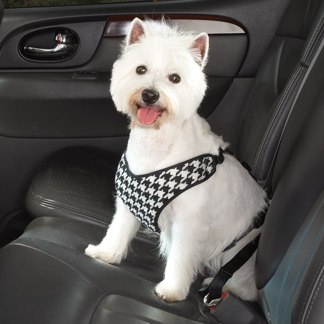 while they are shopping or otherwise going somewhere during the summer months. I literally have found dogs in cars while the owners are at a day-long festival. We are talking about 80+ degrees for multiple hours, windows completely up. I am just glad I heard the dog and the police were able to get there in time. So not only are the owners horrible people for leaving their dog in this condition, every person who walked past this car and heard the exasperated barks from the dog and ignored him are just as guilty in my book.
So my lesson today is twofold. One, NEVER leave your dog in the car when it’s warm out. Leave him at home with the air conditioning while you run your errands. It only takes a few minutes in a car for a dog to overheat in the summer and potentially die. If you wouldn’t leave your child in the car for ten minutes, then don’t leave your dog either. And if you think I’m exaggerating here, I challenge you to put on the thickest jacket you own and go sit in your car with the windows up for ten minutes. This is only a glimpse at what your dog is experiencing (since he cannot sweat like you can).
Two, be aware of your surroundings. When walking from your car to the store, listen for barking, glance at the cars you are passing. Make sure there are no dogs trapped in the cars. If you see one, write down the license plate number and car make/model. Give this information to the manager of the store and tell them a dog is locked in the car. They will gladly make the announcement to get the owner to go care for their animal. If you are somewhere where there isn’t a manager to contact or intercom to use, do not be afraid to call the police. I have done this myself several times and they are always quick to respond to rescue the animal.
** image from petautosafetyblog.com
Where Did That Come From?
Know where the item you are buying came from. Now, this isn’t a rant about only buying American made products – I’ll leave that argument to others. No, this is my little rant about how YOUR purchasing choices are adversely affecting other living things.
First, know where your meat/dairy/eggs are coming from! For too long we have allowed farmers to get bigger, but not better, at what they do. These animals are living lives that I would argue are not even lives. They cannot move, turn around, lift their wings, walk a few feet (or even a few inches for some).
They are pumped full of steroids and hormones, shot up with antibiotics, and fed food unnatural to them. They don’t get to feel grass under their feet, the sun on their backs, or the wind through their fur/feathers. They don’t get to interact naturally with their own species.
Factory farming has been allowed to exsist for way too long – and getting them to stop their abuse is as simple as not buying from the factory farmers. So look into where that piece of cheese came from. Don’t tell me it’s that hard to pull out your iPhone and Google the company’s name!
Second, know where your dog (or cat, or guinea pig, or gerbil…) came from! No one can still claim ignorance to the huge factories across the United States called puppy mills. Best Friends, HSUS, ASPCA, and hundreds of shelters across the country have spent years raiding these facilities in hopes to save as many of the tortured dogs as possible. And for years these organizations have tried to educate the public so that they wouldn’t support these organizations… yet somehow they still exist and in most cases are still thriving.
I have experienced firsthand the trauma the breeder dogs at puppy mills go through. Watching a dog literally freak out because she is touching grass for the first time in her very long 8 years of life is truly heartbreaking. All these dogs in these facilities know is concrete, bad food, and breeding. No warm beds, no toys, no car rides, no dog park, no lap to sit in. Their life is pure hell.
So when looking around for your next companion animal, make sure you know where that animal came from! And if the pet store owner says “a local breeder” ask them the breeder’s name. If they can give you a name, look them up! If they can’t give you a name, it’s because the breeder is a puppy mill!
And I know that many people will give me the argument that they really don’t care about animals because they believe them to be a lesser species. Fine. If you want to hold the beliefs equivalent to that of a caveman incapable of speech or basic knowledge, then that’s your prerogative. But my reasoning for why you shouldn’t buy factory farmed cows or dogs still applies to you:
Where did your meat come from? Factory farmed animals are pumped full of drugs, are unable to move/develop muscle like they naturally should, and eat unnatural foods. The result? Studies have shown that factory farmed meats have more saturated fat and cholesterol than free range, organic meat. Plain and simple, it is better for you AND the animal if you go free range, organic!
 Where did your dog come from? Puppy mill owners are focused on quantity, not quality. Many shelters who have completed raids report most of the breeder dogs have genetic defects. The result? Those genetic defects are being passed onto the breeder dog’s children ie the puppy you just paid $600+ for. So not only did you just pay a ridiculous amount of money for an animal that isn’t even vaccinated or fixed, you also just signed on to a couple thousand dollars worth of vet bills, or worse, a dead dog. Example – I fostered a puppy mill breeder who was rescued from Wallace Haven’s facility in Wisconsin. She was about a year old at the time. My foster, now owned by my mother and named Miss Moneypenny, had a double ear infection and two luxating patellas (translation: she needed knee surgery on both her back legs). The vet bill if I had bought her from the mill as a puppy? Over $3000.
So be smart! In this day and age, we have the technology and knowhow to figure out where something came from. If you’re going to eat meat, or dairy, or eggs – make sure the animal that made this sacrifice for you at least was able to enjoy their life. If you are looking to get a pet – go to your local shelter or rescue group. A great site to look for your next new family member is http://www.petfinder.com.
Kitten Season
Cats mate around the same time every year. And therefore all give birth around the same time of the year as well. Well, that time of the year is now and shelters all over the country will soon be bombarded with litters of kittens, if they haven’t been hit already. If you have ever considered it, I strongly encourage you to contact your local shelter and offer yourself and your home for fostering. Kittens are rather fra gile in terms of having an immune system, so literally ever hour spent in the shelter is a game of life and death for these little guys. Having them in your home, safe from upper respiratory infections, they will be able to build up their immune system, become better socialized, and be amazing candidates for adoption once they hit that 2 pound/8 week mark!
I currently have two 3 week old orphaned kittens and while they do take a little work, they are an absolute joy to have in my home. My dog, Monty, was terrified of them at first but now enjoys playing hide-and-seek with them (the kittens hide under the couch and will pop out to bat at his paws). My cat, Loki, is not allowed to meet them for a while since cats need time to get used to new animals in a house… plus Loki could be somehow carrying something that could be dangerous to these little ones. So here’s hoping in a few weeks he is friendly with them when they officially meet!
Easter with your pets
Easter, like most holidays, holds traditions that are harmful for companion animals. Easter lilies, while beautiful, are one of the most poisonous plants for cats. Just a few nibbles of any part of this plant will kill your cat – so please do not put any Easter lilies in your home if you have cats. Even if you think your cat cannot reach the plant, there is a good chance he can and this is not the kind of risk you should take!
Easter baskets are fun to hide and even more fun to find. But be very careful that your pets do not get to those baskets before the kids do. From the chocolate to the fake plastic grass, many items in a typical basket are harmful for your pets if they consume them.
Easter is also a time when some people believe it’s a good idea to buy or adopt a rabbit as a pet (tis the season, right?). But rabbits, like any companion animal, require some serious consideration before you decide to adopt one. First off, rabbits can live up to 10 years. So when looking at the cute bunny, make sure to ask yourself if you are ready for a 10 year commitment with this animal. Rabbits are rather fragile, high maintenance creatures: they can overheat easily (so you cannot keep them outside), if held wrong they can break their own backs, they love to chew everything from wires to couches so everything in your home must be bunny-proofed, they require at least two hours a day out of their cage so they can run around and get exercise, the cage they live in must be at least four times the rabbit’s body length. In my opinion, rabbits are higher maintenance than cats, but just a little less than dogs and are not very good pets for younger children.
Please be careful this holiday so that your animals can enjoy the festivities as much as you do and make sure to seriously consider the responsibilities before adopting a rabbit. Happy Easter!
Why pinch and choke collars are a bad idea
The majority of people get a pinch or choke collar because their dog pulls too much or is extremely strong. Unfortunately, pinch/choke collars usually do not stop a dog from pulling nor will it give the owner more control over the dog if he is really strong. So essentially, your reason for getting the collar is not being helped with the collar. Instead, you should look into a harness that attaches the leash to its front (the dog’s chest) this will both provide you with more control over your dog’s strength and will teach your dog to stop pulling.
The collars were not even originally meant for everyday use. The choke collar was originally intended for training purposes (for use only during training) back when negative reinforcement and force were the staples of dog training. Now that positive reinforcement training is becoming more popular (sorry, Caesar), the pinch collar should never be used. If put on the wrong way, it can lock into a tight position permanently and choke your dog to death. It also causes severe strain on the dog’s throat and can lead to serious esophagus problems. There is no need or reason to own or use this collar.
Some dogs react when they see another dog when out on a leash. When leashed, dogs understand that they are hindered and may not be able to fully defend themselves if the situation calls for it. That is why many dogs show some aggression to other dogs when on walks, but are perfectly fine when off leash at dog parks. Typically, the dog will bark at the others and may “lunge” to show they are tough so that the other dog won’t try anything. (the vast majority of dogs who are acting tough are actually scared) If the dog is wearing a pinch collar when they lunge they will feel a sensation similar to being bit on their neck. So now your dog is going to associate seeing another dog with getting bit. This will cause your dog to become even more aggressive when they see other dogs and can lead to some serious behavior issues.
Overall, I consider both these types of collars similar to that of medieval torture devices. They serve no purpose other than to harm your companion and cause medical and behavioral problems. Please look into getting a harness if you are worried about the strength of your dog.
All About the Microchip

Basically a microchip is a small, scannable chip about the size of an uncooked grain of rice. The microchip has a unique id number attached to it that, once called in, will provide all the contact information of the animal’s owner. Every stray facility and police station has at least one scanner so if they come across a stray animal, they will check for a microchip.
I definitely recommend microchipping to anyone with a companion animal. The process of putting the chip into your pet is very easy and rather painless. The chip is inserted under the skin of the animal, between the shoulder blades, with a needle. There rarely is blood and I have yet to see an animal react to the procedure. Once the microchip is inserted, it may move a few inches but you will probably never be able to find it/feel it.
You will then have the unique id number registered to you with all your contact information. Remember to always update this information as time goes on and you move, change your phone number, or get a new email account. If the information assigned to the chip is no longer valid, the whole thing is pointless because no one can contact you.
Many people with dogs are willing to get a microchip because they can easily see how it is helpful. However, some cat owners do not think it is necessary to get a microchip for their indoor cat because it lives inside 24/7. I would argue that this is actually why you would want to microchip your cat because they will get lost very easily if they ever make a great escape to the outdoors. Less than 10% of cats are reclaimed at shelters – if you microchip your cat and it ends up at a stray facility/police station/animal shelter/vet clinic they will all know to scan for a microchip and will then be able to find you, the owner.
Microchipping is fairly cheap (about $20-$35). Contact your veterinarian or local shelter if you are interested in getting one for your pet!
**Photo taken from http://www.howstuffworks.com
 Jenna Riedi